
Countersinks
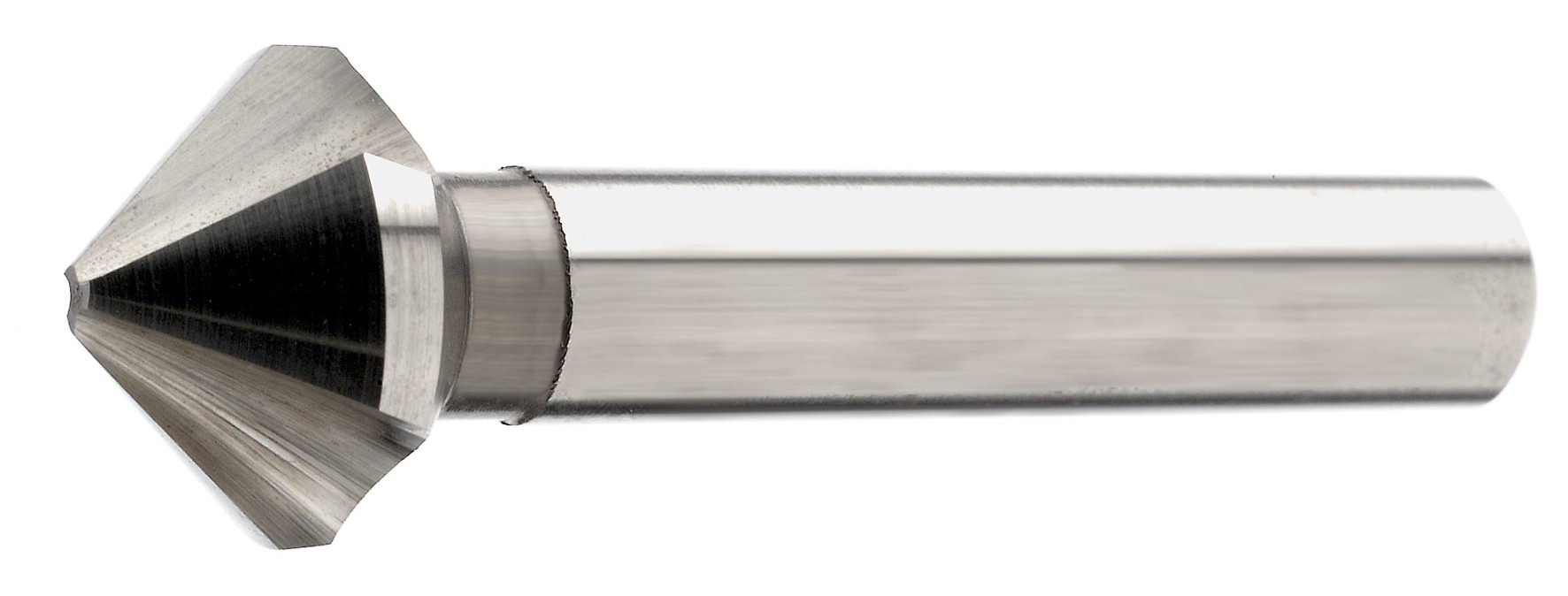
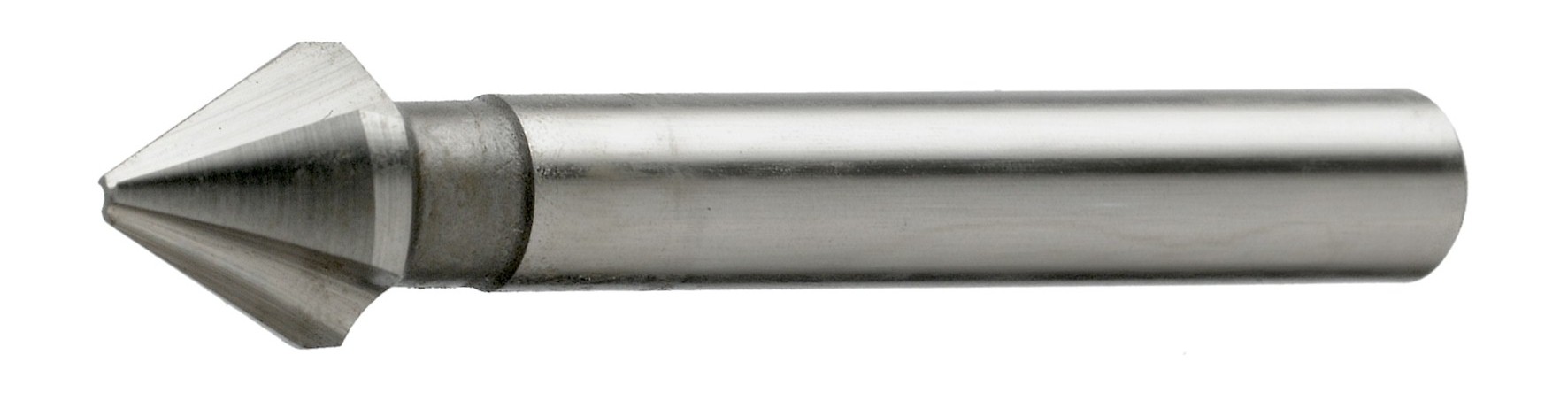
HSSE countersink with perfect geometry from Nachreiner
Countersinks 90° & 60° – Precision Countersinks according to DIN 335
90° and 60° countersinks for precise countersinking, deburring, and chamfering of drilled holes. Suitable for professional applications in mechanical engineering, metalworking, workshops, and industrial environments.
Product Features:
- Countersinks with 90° or 60° point angle
- Diameter range: Ø 6.3 – 31.0 mm
- 90° version according to DIN 335 Form C
- Precision-ground cutting edges
- High dimensional accuracy and excellent concentricity
- Long tool life
Versions:
- Straight shank
- Extra-long version with straight shank
Applications:
- Countersinking for countersunk screws
- Deburring of drilled holes
- Chamfering of edges and holes
Suitable Materials:
- Steel
- Cast iron
- Non-ferrous metals (e.g., aluminum, brass)
- Plastics
- Stainless steel
Product Filter Attributes (for online shop):
- Tool type: Countersink
- Point angle: 90° / 60°
- Diameter: Ø 6.3 – 31.0 mm
- Standard: DIN 335 Form C (90°)
- Shank type: Straight shank / 3-flat shank
- Version: Standard / Extra-long
- Application area: Countersinking, deburring, chamfering
- Machine type: CNC machine / Hand-held machine
- Materials: Steel, cast iron, non-ferrous metals, plastics, stainless steel
- Usage: Industrial applications, series production
Perfect geometry of the cutting edges of our HSSE countersinks
Precision and smooth operation of the countersink are directly related. Therefore, we place the highest importance on the high-quality manufacturing of our countersinks and the geometrically perfect arrangement of the cutting edges. Most HSSE tapered countersinks available on the market have an odd number of cutting edges, as do ours. The three cutting edges are excellently and precisely crafted, allowing for perfect machining results on all workpieces suitable for machining with high-speed steel (HSS) or HSSE tools. If you plan to process materials with strength far beyond the limits for HSS or HSSE machining, we recommend using solid carbide (VHM) tapered countersinks from our range. Although solid carbide tools are more expensive upfront, they offer better tool life and allow for higher machining speeds. Alternatively, you can have the cutting edges refined or coated to optimize properties (e.g., heat resistance). We are happy to assist you with any questions or requests and can also produce tools to factory standards if standard solutions from our range do not meet your needs. By the way, we can also regrind many cutting tools for you, significantly extending their service life.
Which countersink for which hole?
A countersink is used to prepare existing drilled holes so that screws, nuts, or rivets can be recessed flush with the surface of the workpiece.
For metric countersunk screws, a 90° countersink angle is the most common choice, as this angle matches the standard profile of metric countersunk screws and ensures clean, flush seating.
60° countersinks, on the other hand, are primarily used for deburring pilot or core holes, meaning they are used to remove sharp edges after drilling.
For special applications (e.g., sheet metal rivets or other standards), additional angles such as 120° or 82° are available. These correspond to more specific design and standard requirements.
When machining particularly hard materials, a solid carbide countersink may be preferable to an HSS or HSSE countersink, as it provides longer tool life.
What is the angle of a countersink?
60° and 90° are the standard versions in the HSSE range. These cover most common applications:
-
60° for deburring core holes
-
90° for countersinking metric countersunk screws
Other angles are possible (e.g., 120° for sheet metal rivets or 82° for US standards), but these are generally considered more specialized solutions and are not the most common standard countersinks in the HSSE range.