
Center drills Form R
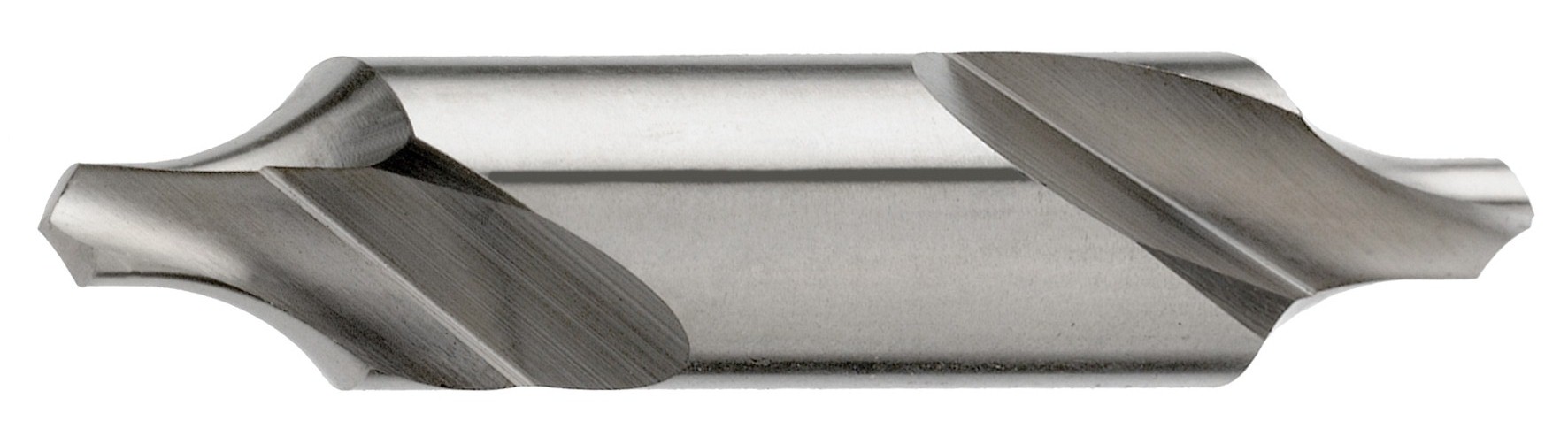


Center Drill Form R for Precise Center Drilling
Creating precise center drill holes with a standard metal drill is both a technical and craftsmanship challenge. Misaligned drill holes or inadequate positional accuracy due to drill wandering are common issues. To save time, increase precision, and reduce scrap production (which ultimately leads to unnecessary costs), it is recommended to use a Form R center drill. This special type is certified according to DIN 333 and enables the standardized production of center holes as specified in DIN 332. Form R center drills are typically made from HSS (High-Speed Steel), but for specific applications, HSSE variants are also available. The five-percent addition of cobalt in the alloy composition increases tool life. Moreover, HSSE Form R center drills can handle special steels with higher strength values and other challenging materials.
Center Drills in Form R and Other Shapes According to DIN 333 and DIN 332
Form R HSS and HSSE center drills stand out due to their particularly short design and stepped profile. The primary function of the center drill is made possible by the additional centering tip. Unlike other metal drills, the diameter of the centering tip is specified as the nominal diameter of the center drill. The centering tip typically has a length corresponding to its diameter. The nominal diameter of the centering tip remains constant along its entire length. Standard diameters range from 0.5 to 12.5 mm. Complete sets, special sizes, and custom coatings for Form R center drills are available from Nachreiner upon request. Form R refers to the hole shapes specified in DIN 332 for which the center drill is designed. In addition to Form R, the following types are also available:
The various forms differ in the transition between the diameter of the centering tip and the shaft diameter. It is essential to select the correct form for your center drill to ensure accurate results.
Advantages of Center Drills Compared to Conventional Metal Drills
Standard metal drills can deviate from the ideal drilling center, leading to inaccuracies. Even minor deviations can significantly impact the precision of both machine and hand-operated drilling processes. At the end of the centering tip, the cutting edges transition at a 60-degree angle into the shaft diameter, which is naturally larger than the nominal diameter. The advantages of the smaller centering tip become evident through significantly reduced radial forces. Additionally, the reaction forces from generated drill chips are lower. This substantially improves positional accuracy and prevents the wandering of the subsequently used twist drill.
Deep drilling is not possible with a center drill. Therefore, suitable twist drills are typically used afterward for the primary drilling process. The centering hole guides these drills from the beginning of the drilling operation. Due to the difference in tip angle between the center drill and a standard twist drill, the metal drill is only guided at one point of the respective contact surface during the main drilling process, which further contributes to the precision of the hole.